One list of what to fix. Before the release ships.
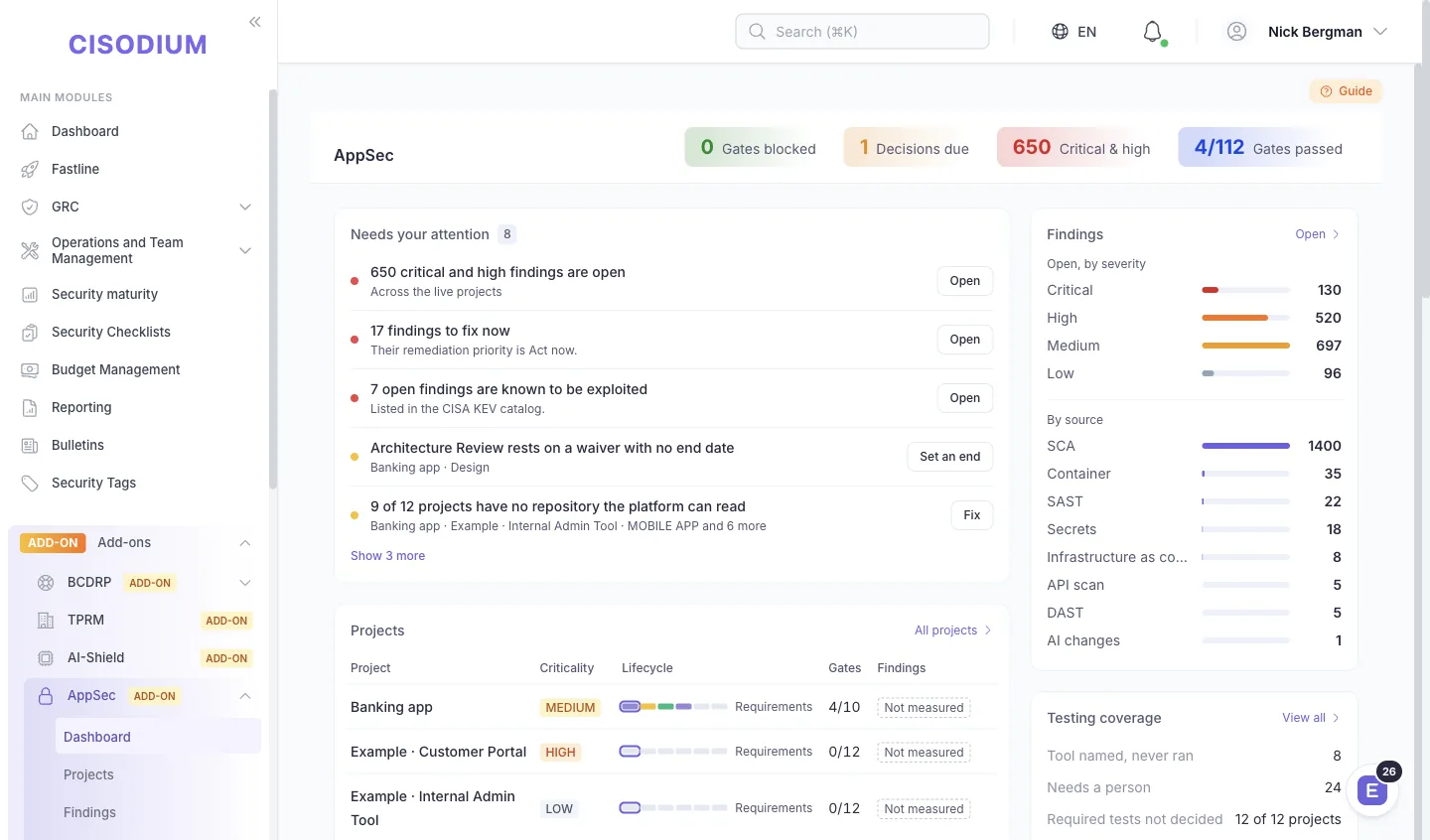
Scanners, pipelines and pentests feed one register per application. Rank fixes by what is actually exploited, gate releases on rules you wrote down and keep an SBOM per release for the CRA file.
What this replaces
- Six scanners, six dashboards and no single list of what to fix first.
- Release day arrives before anyone agrees whether the open criticals block it.
- The regulator asks for an SBOM; the build server had one somewhere.
What changes
- One priority per finding from KEV and EPSS, with a fix-by date attached.
- A gate decision cites the rule behind it; a waiver carries an end date.
- An SBOM snapshot per release, exported for the CRA technical documentation.
What you do here
- 1Register every application with its criticality.
Each project carries its lifecycle stage, its gates and the tests it requires — what a release review reads.
Projects - 2Pull every scanner into one register.
SCA, SAST, secrets, containers, IaC, DAST and API findings land per project, each with its source.
Findings - 3Rank fixes by exploitation, not CVSS alone.
Known-exploited CVEs and EPSS set the priority; each priority carries its own fix-by date.
Risk posture - 4Gate the release on rules written down.
A gate passes or blocks against the policy; a waiver names its owner and its end date.
Release gates - 5Feed SBOMs straight from the pipeline.
CycloneDX or SPDX arrives by upload or API key; snapshots, VEX and export follow for the CRA file.
SBOM - 6Run the pentest beside the code it tested.
Scope, findings and retests sit with the project, so a fix closes on evidence rather than a promise.
Pentesting
Where the role stops
Applications, findings, gates and pentests are yours to run. The risk register, compliance frameworks and user accounts stay with the people who own them.
Works with
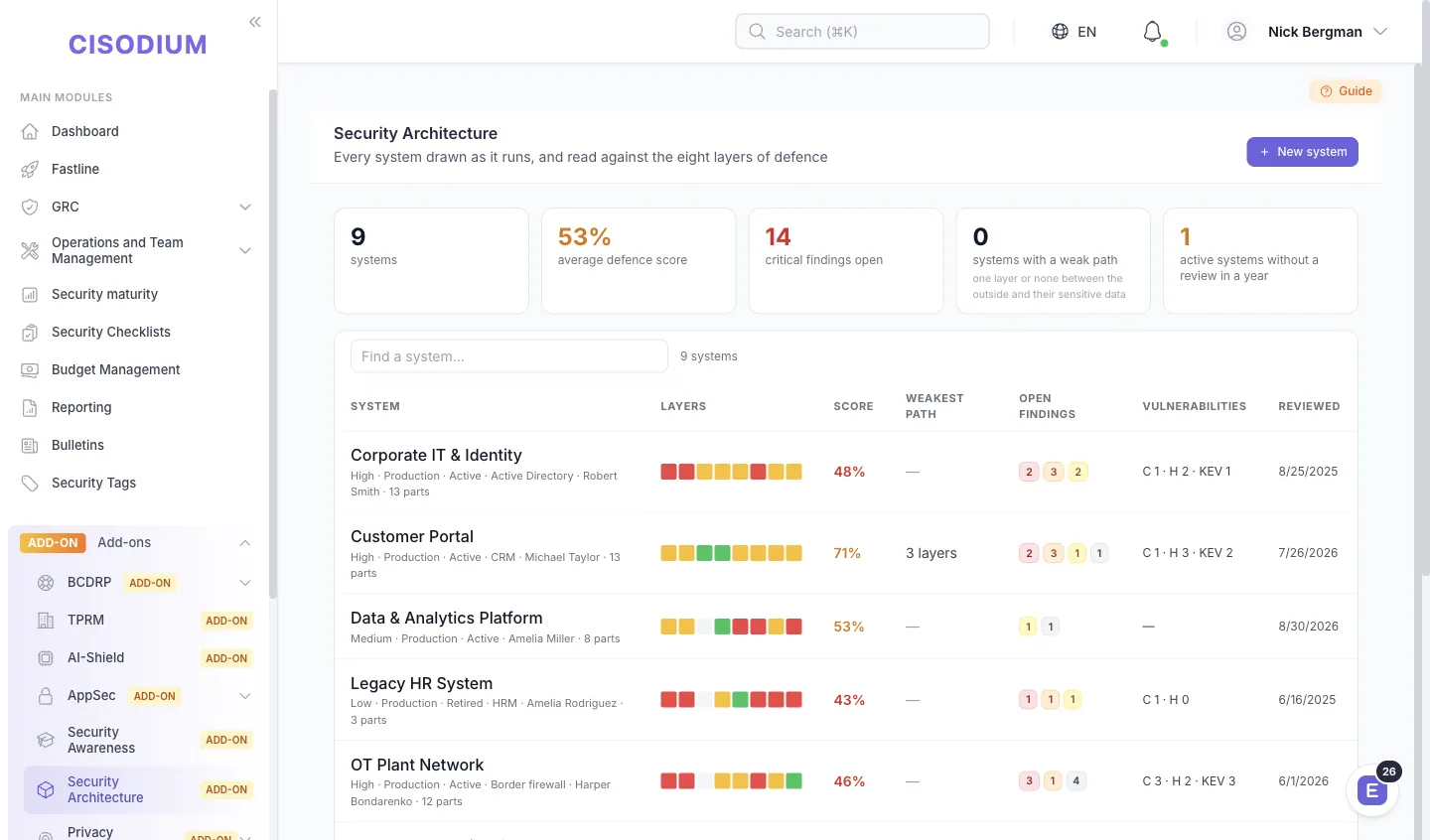 ARCHSecurity ArchitectEvery system, drawn as it runs. Every layer, scored.Draw each system as it actually runs, then read it against eight layers of defence. The thin layer, the path with one wall and the overdue design review show up before an attacker or an auditor finds them.
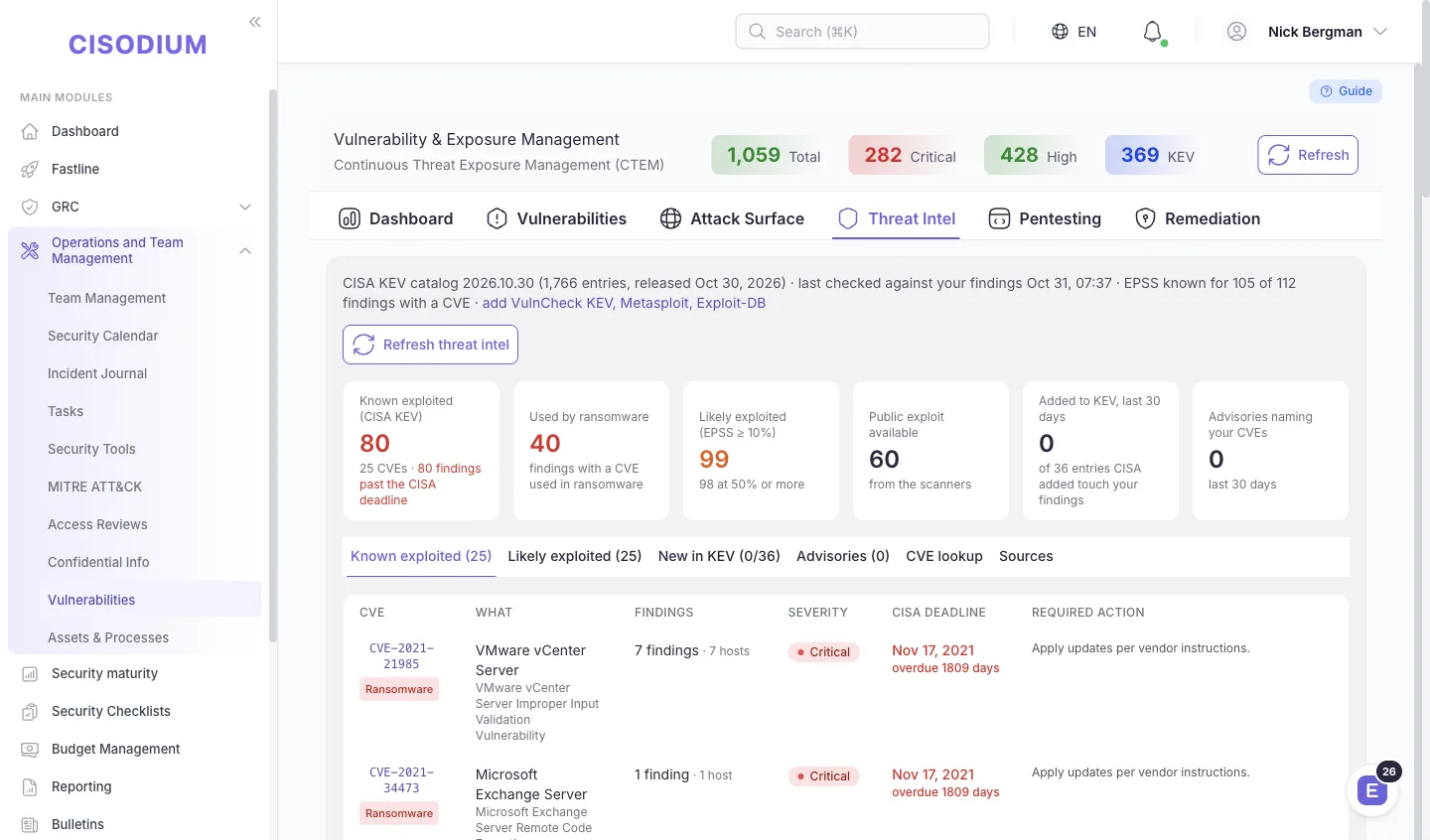 INTELThreat Intelligence AnalystForty advisories a day. Three that touch you.Public threat feeds read against your own findings: which CVEs are known exploited, which ones ransomware uses, which are likely next. Then the attack paths from an entry point to the systems that matter most.
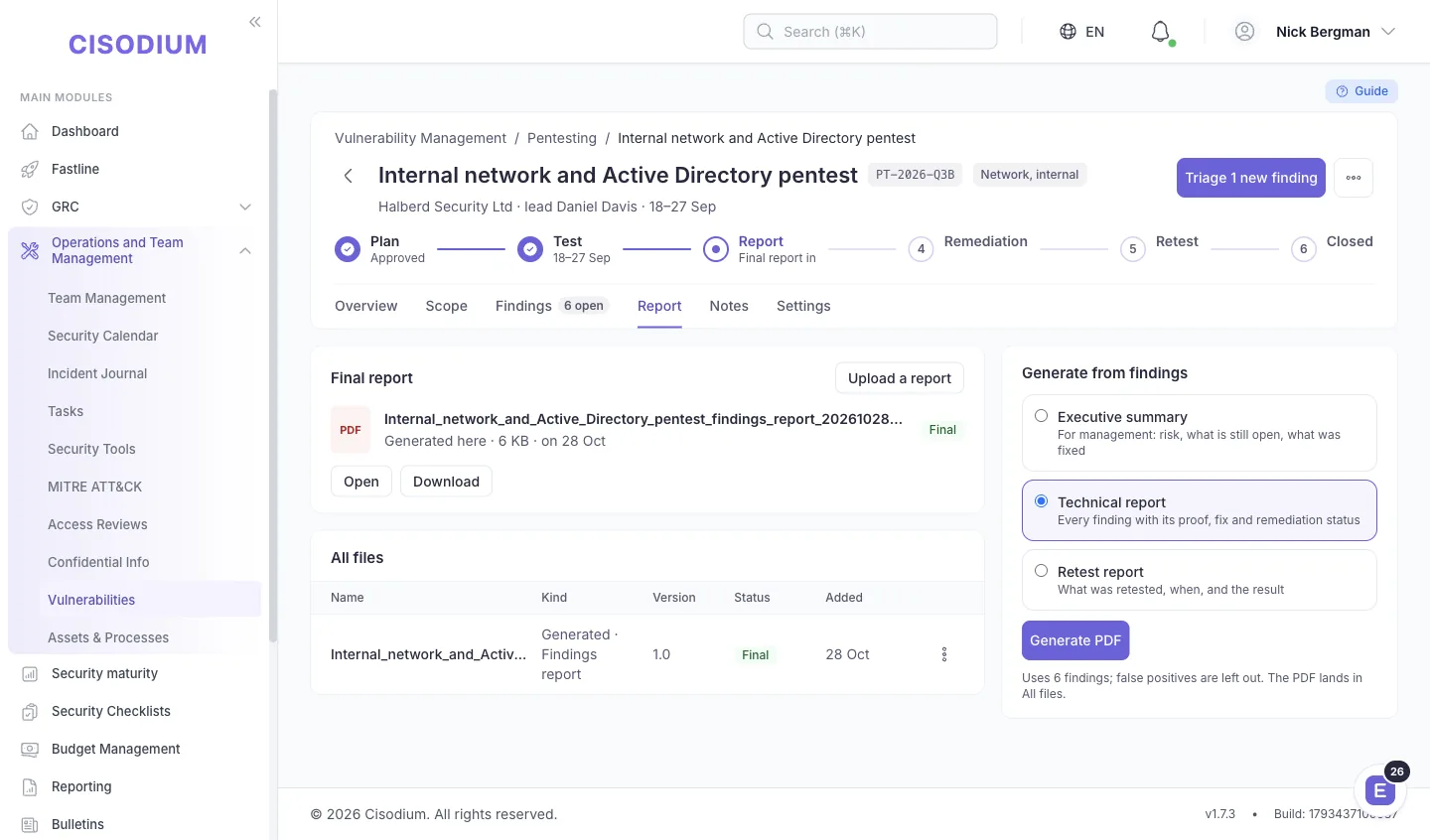 PENTESTPenetration TesterFindings where the fix happens. No PDF to re-key.Invited for one engagement: accept the rules of engagement, read the scope, record findings with proof and retest the fixes — inside the client's own workspace, within the dates and addresses they allowed.
Ready to move
beyond legacy GRC?
14-day free trial. No credit card. Cloud or on-premises.