Every system, drawn as it runs. Every layer, scored.
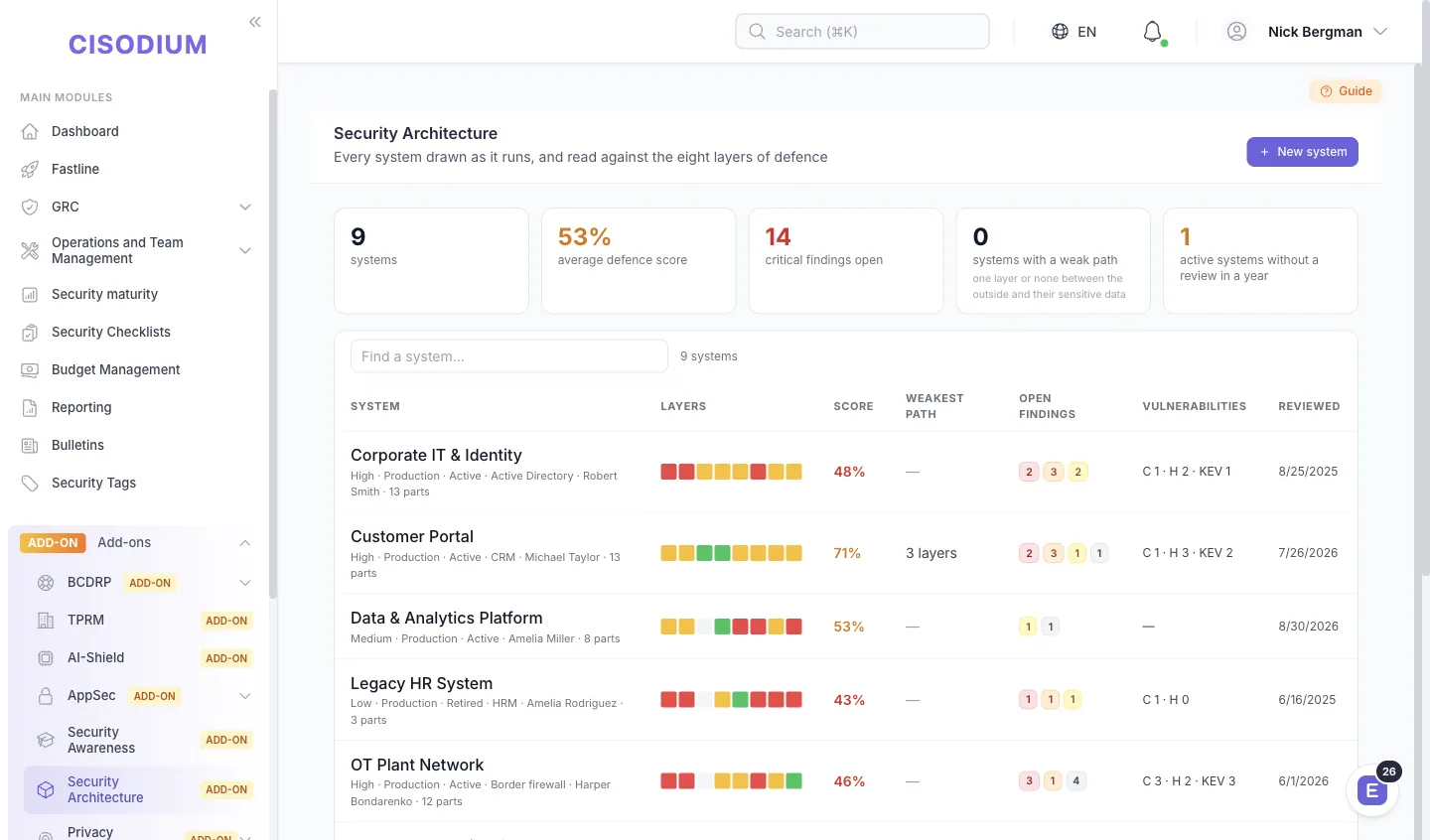
Draw each system as it actually runs, then read it against eight layers of defence. The thin layer, the path with one wall and the overdue design review show up before an attacker or an auditor finds them.
What this replaces
- The architecture diagram was accurate the week it was drawn.
- Every review asks where the defence is thin; nobody can show it.
- Tools get bought; nobody can say which control each one serves.
What changes
- A defence score per system across eight layers, with the weakest path counted.
- Systems overdue for a design review listed by date, not remembered.
- Each security tool tied to the controls it delivers, so gaps and duplicates show.
What you do here
- 1Draw each system from the inventory.
Parts come straight from the asset list, already linked to their assets and the vulnerabilities on them.
Security architecture - 2Score every system against eight layers of defence.
Each layer is rated separately, so a weak score always points at a named layer.
Defence layers - 3Find the path with one wall or none.
The weakest path counts the layers between the outside and the sensitive data, system by system.
Security architecture - 4Map each security tool to the controls it delivers.
A tool backing no control stands out — so does a control with no tool behind it.
Security tools - 5Keep design reviews on a calendar.
An active system without a review in twelve months is flagged with the date of its last one.
Security architecture - 6Write the standard once, then link it.
Architecture standards live in the document library with versions and approvals, tied to the controls they set.
Documents
Where the role stops
Systems, defence layers, controls and tools are yours to change. Risks and assets are read-only here; their owners keep those registers.
Works with
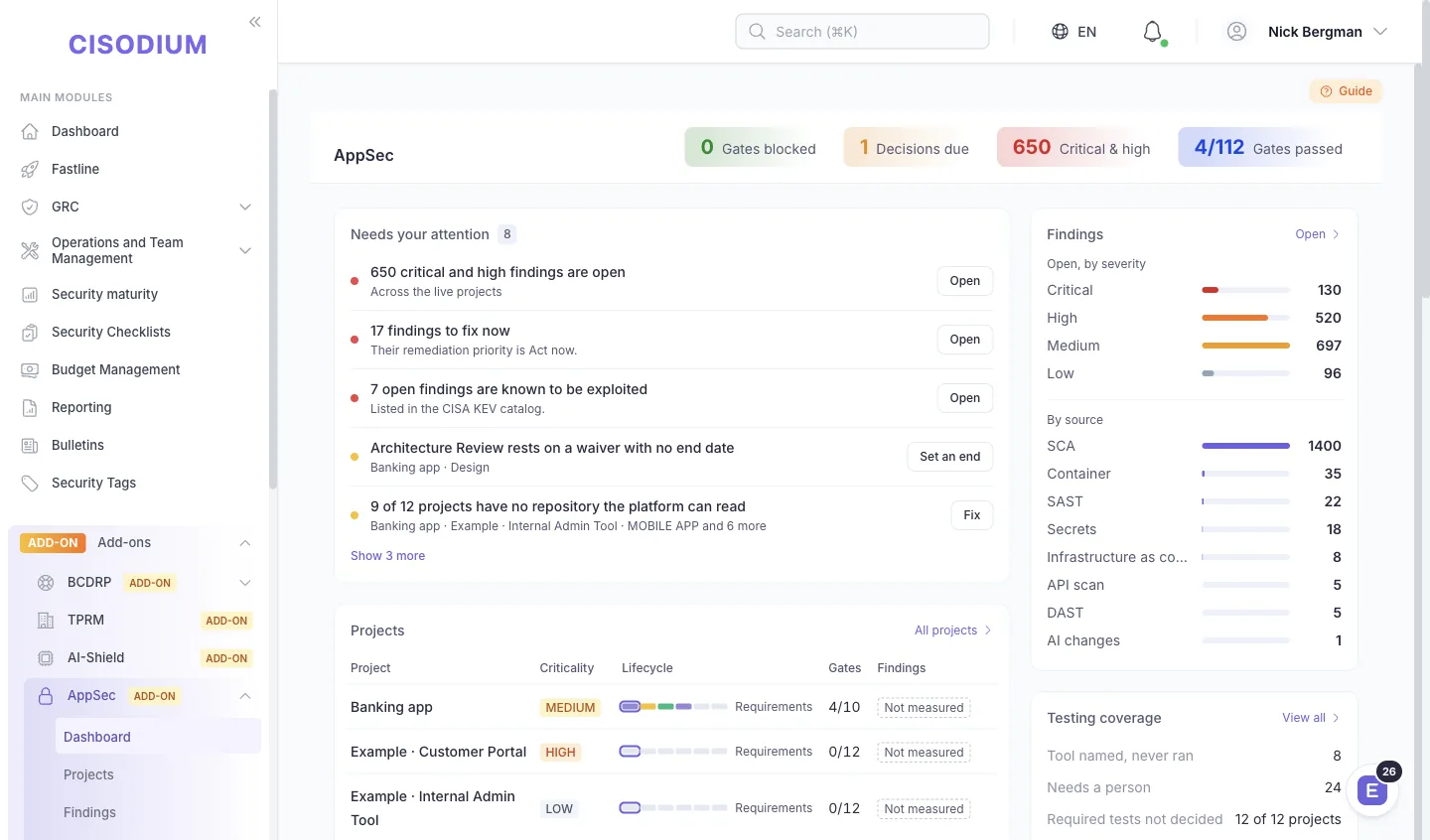 APPSECAppSec LeadOne list of what to fix. Before the release ships.Scanners, pipelines and pentests feed one register per application. Rank fixes by what is actually exploited, gate releases on rules you wrote down and keep an SBOM per release for the CRA file.
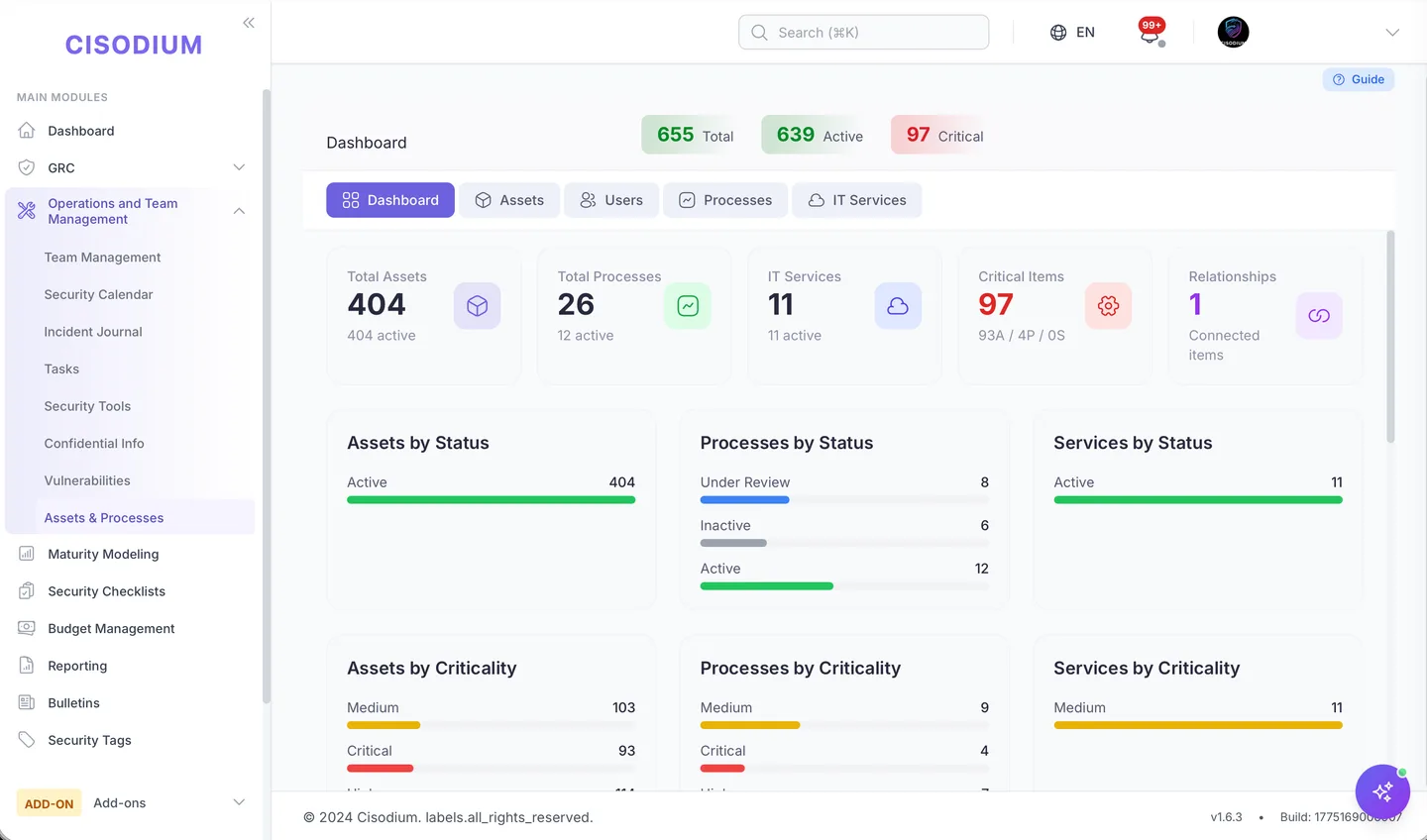 ASSETSIT ManagerPatched is a claim. Hardened is a scan.An inventory is accurate on the day it was exported. Here the register stays live, exceptions are written decisions and each system is scanned against its baseline with the hardening add-on.
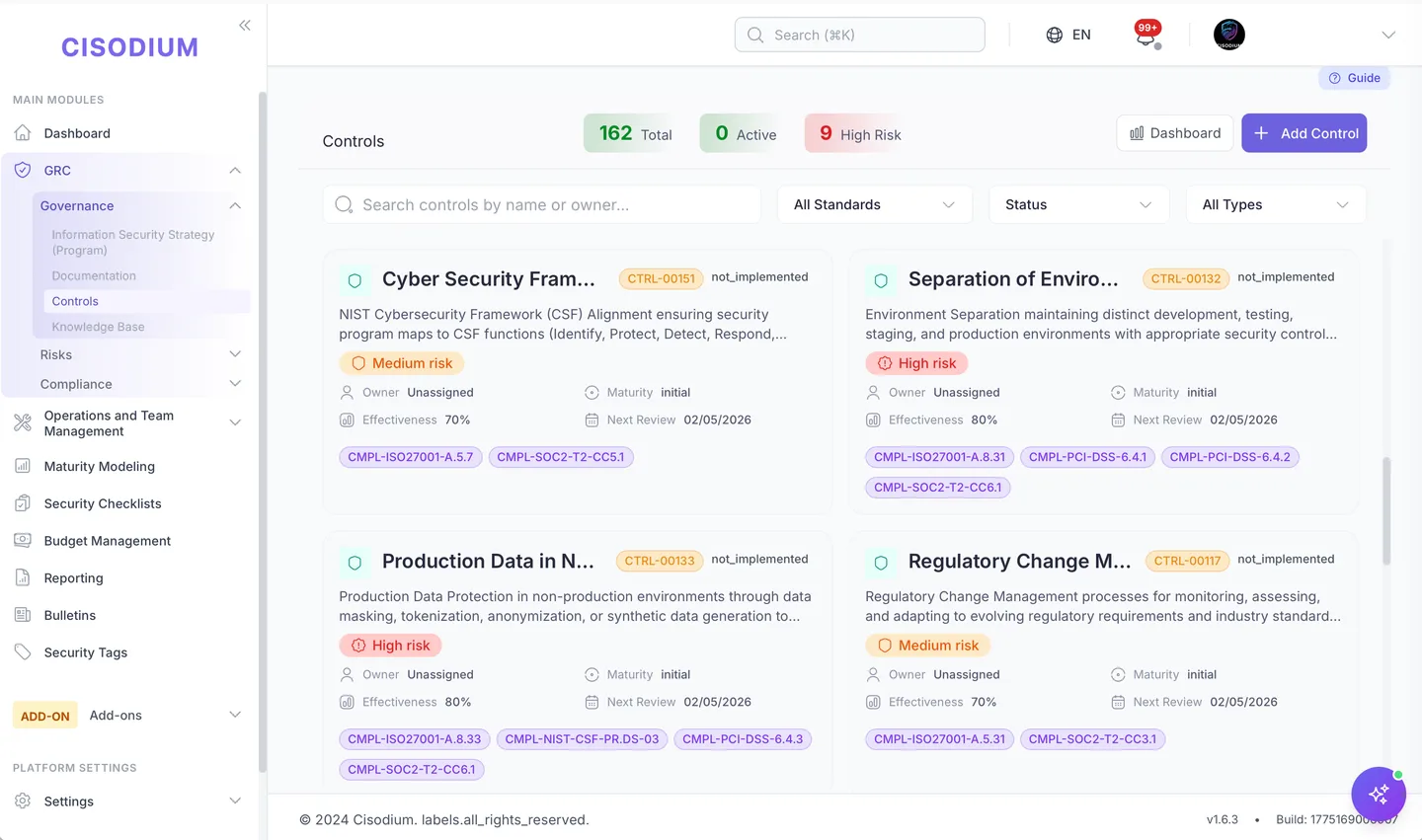 OPSSecurity ManagerNothing falls through the cracks.Own the operational day: the vulnerability queue, incidents from triage to lessons learned, access certifications, hardening sign-offs and phishing rounds. Each carries an owner, a date and a record behind it.
Ready to move
beyond legacy GRC?
14-day free trial. No credit card. Cloud or on-premises.